

Before diving into the heart of this article, I want to briefly introduce myself. My name is Evan Gough, and I am deeply passionate about soccer. I live in Baltimore, Maryland with my wife and dog, and while I love collecting, there is one passion that stands above the rest: Chelsea Football Club.
When I discovered the soccer card hobby, it felt like a natural fit—an opportunity to merge my love of collecting with my devotion to Chelsea. I’ve been a Chelsea supporter since 2010. Although my father was born in South London and raised as a Crystal Palace fan, I found my own connection to Chelsea through FIFA 2011. While that origin story may not carry much weight in debates with European supporters, my dedication to the club runs deep. When it comes to Chelsea, you’d think I lived on Fulham Road.
I watch every match, know every player from the academy to the first team, and in April 2025, I experienced my first Premier League match at Stamford Bridge—an unforgettable day that solidified a lifelong passion.
I’ve been collecting soccer cards for a few years now, and I’m by no means an expert—nor am I wealthy. What I have figured out is a system that allows me to collect what I genuinely enjoy while also making money along the way. This article is for the average collector who wants to become more immersed in the hobby and build a sustainable process—one that lets you collect the cards you want without constantly dipping into your paycheck.

Start Investing, Not Just Collecting
At first, this may sound counterintuitive. After all, collecting is the heart of the hobby. But if your goal is sustainability, you need to create cash flow before you can freely collect. Start with whatever money you have and focus on smart purchases that offer low risk and reasonable margins.
If you begin by only buying cards you personally like, you’ll likely find yourself pulling from your paycheck over and over again. Instead, look for opportunities to flip cards for profit. Platforms like eBay, Instagram stories, Facebook groups, and Whatnot are great places to find undervalued cards. Don’t be afraid to negotiate—most people list cards for a reason and often have room to move on price especially on auction platforms like Whatnot. I’ve been able to find great deals without paying full compswhich is often unavoidable on eBay.
Record Your Progress
Staying organized is essential. Tracking when you bought a card, who you bought it from, and how much you paid helps ensure you’re making informed decisions and staying profitable. I use an Excel spreadsheet to log each card, including purchase dates, sellers, and prices. I also record every sale—who I sold to, when, and my net profit.
This system keeps everything clear and transparent and makes tax season much easier. At the end of each year, you can see exactly how much you made and have a complete record of every transaction. Yes, it’s time-consuming—but it’s incredibly rewarding. It also becomes valuable data when you’re looking to move a specific card again, since you can revisit past transactions and identify potential repeat buyers.
Build Relationships and Know What Others Collect
Relationships are one of the most underrated aspects of the hobby. They don’t just help you buy and sell cards—they make collecting more enjoyable and less isolating. Once you’ve completed a few deals with someone, trust begins to form, and transactions often become easier and smoother.
As you build connections, take note of what others collect. If you come across a card that fits someone’s PC, reach out. Even if a deal doesn’t happen every time, the relationship strengthens—and often, deals follow naturally. Having vouches is also crucial for building trust and establishing integrity. I currently have 30–40 vouches saved in my Instagram story highlights, and when starting a new relationship, I always encourage people review those vouches.
Use Trading to Increase Inventory and Value
Trading has been a key part of my journey. Not every card sells easily, and everyone—no matter how experienced—ends up with inventory that gets stuck. Once you’ve built trust and a solid reputation, trading becomes much more accessible.
Trading allows you to move cards that may be hard to sell or already at peak value while bringing in new inventory—sometimes at a higher overall value. It’s also one of the most fun parts of the hobby, whether you’re trading into cards for your personal collection or picking up pieces you plan to sell later.
Buy Raw, Grade, and Be Patient
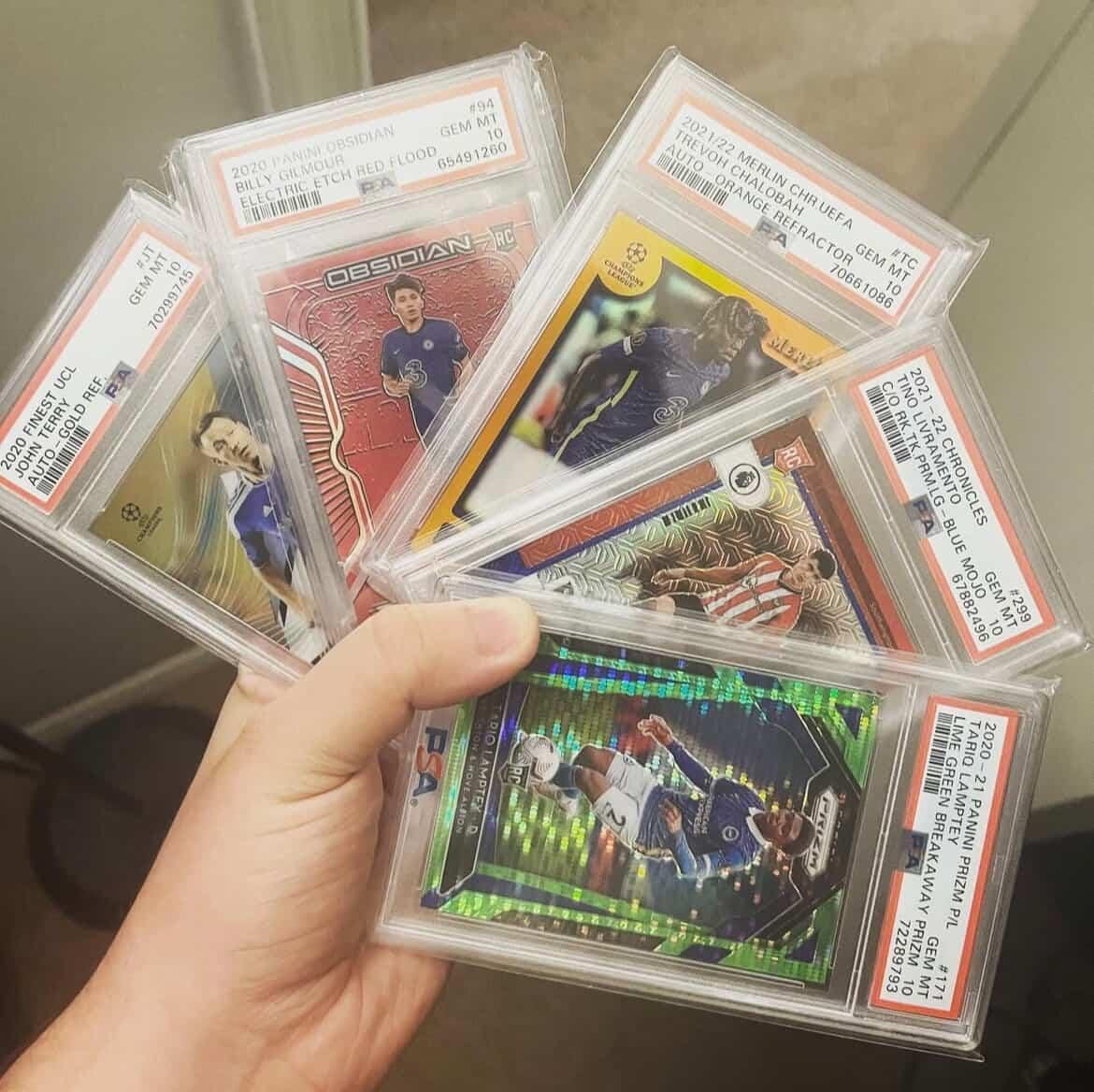
Buying raw and grading is not easy, and it takes time to reach consistent success. When buying cards to flip, consider purchasing raw cards and having them cleaned. I have two trusted connections—one for cleaning and another who helps evaluate which cards are likely to grade well and which are not.
In today’s hobby, grading raw cards is controversial. Professional Sports Authenticator (PSA) is the most desirable grading company, but it’s expensive, and submission times can take months.That said, the potential rewards can be significant.
When a PSA submission finally pops, it feels like Christmas morning. I immediately post any non-PC cards on my Instagram and start generating cash flow. Rinse and repeat: buy raw, grade, sell—and keep your PC.
Reinvest What You Make
To keep my collecting sustainable, I follow a simple rule: I can’t buy unless I’ve sold enough. This prevents me from dipping into my paycheck and forces me to keep cards moving.
I personally collect Chelsea academy players in PSA 10s—a very niche PC, with some cards being inexpensive and others more costly. I keep all my card money in one place and only use those funds for buying cards. It’s incredibly rewarding to look at my PC and know that every card was acquired by following the principles above.
Whether you’re a veteran collector or someone who started this month, I’m happy to share my tips and tricks with you. Everyone collects different cards, and everyone collects in different ways. The approach outlined above is how I collect, how I find joy in the hobby, and how I’ve built a sustainable practice that allows me to continue participating in something I love: soccer—or, for you Europeans, football—and collecting.
Feel free to give me a follow on Instagram to connect. Maybe we can make a deal happen.
Happy collecting!
Evan Gough
a.k.a. gough_collects